Correct method
Chosen around the surface

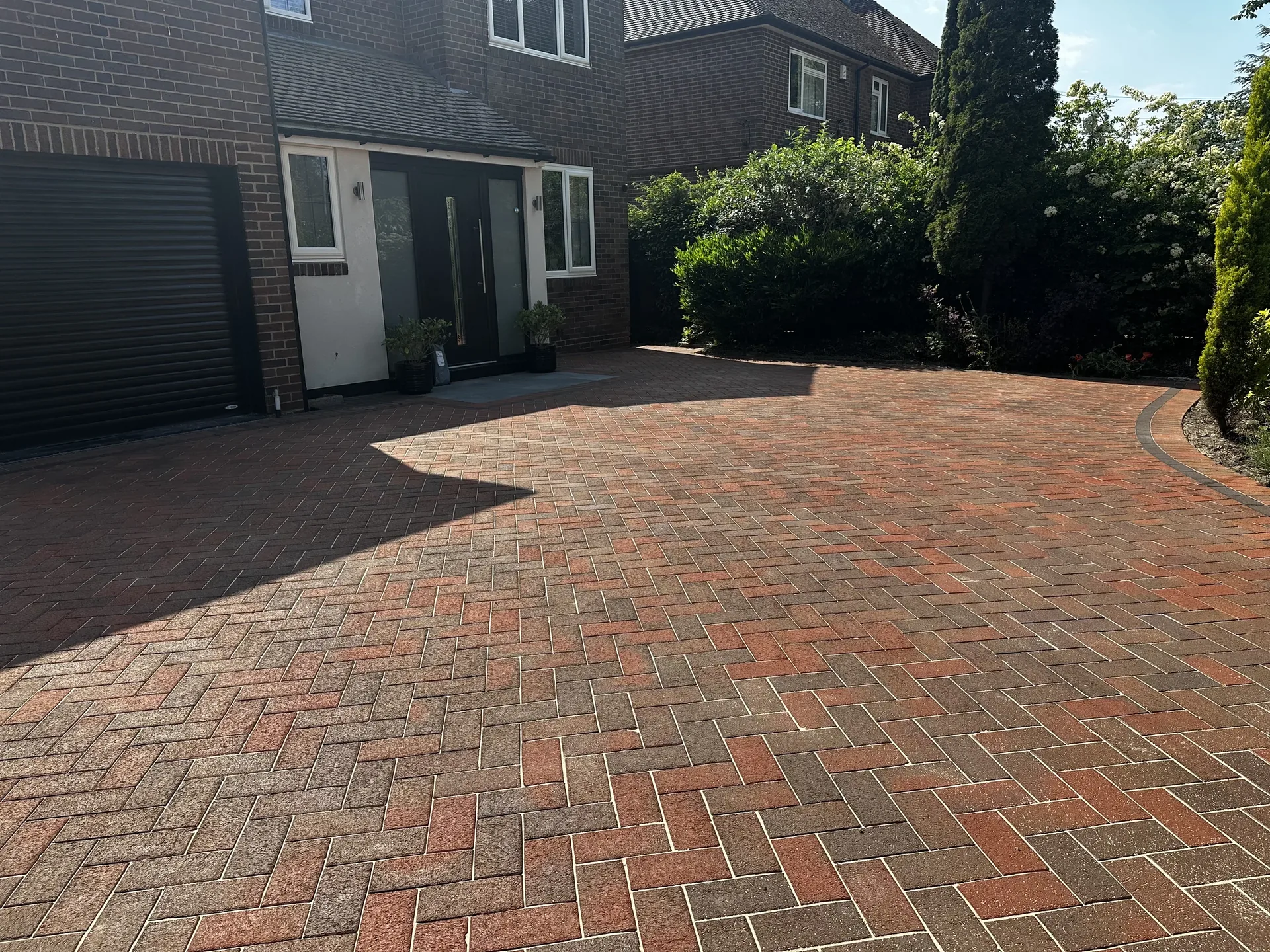
We clean block paving, tarmac, concrete, pattern-imprinted concrete, resin-bound driveways and natural stone across Leek. Before work begins, we identify the material, assess the staining, joints, drainage and any previous coating, then select a suitable cleaning method. Block paving can be re-sanded once fully dry, and sealing is recommended only where it offers a clear benefit.
Chosen around the surface
Not just a quick wash
No exaggerated promises
Leek and nearby towns
Leek’s exposed weather and surrounding countryside can leave driveways affected by moss, algae, lichen and general organic staining. We select a controlled method for block paving, stone, tarmac, concrete and resin surfaces.
Before work begins, we inspect access, drainage, joint condition, staining and any previous coating. This tells us whether the driveway needs controlled pressure, targeted pre-treatment, gentler agitation or additional finishing work. It also means we can explain what should improve and where deeply absorbed oil, rust, ageing or surface damage may remain visible.
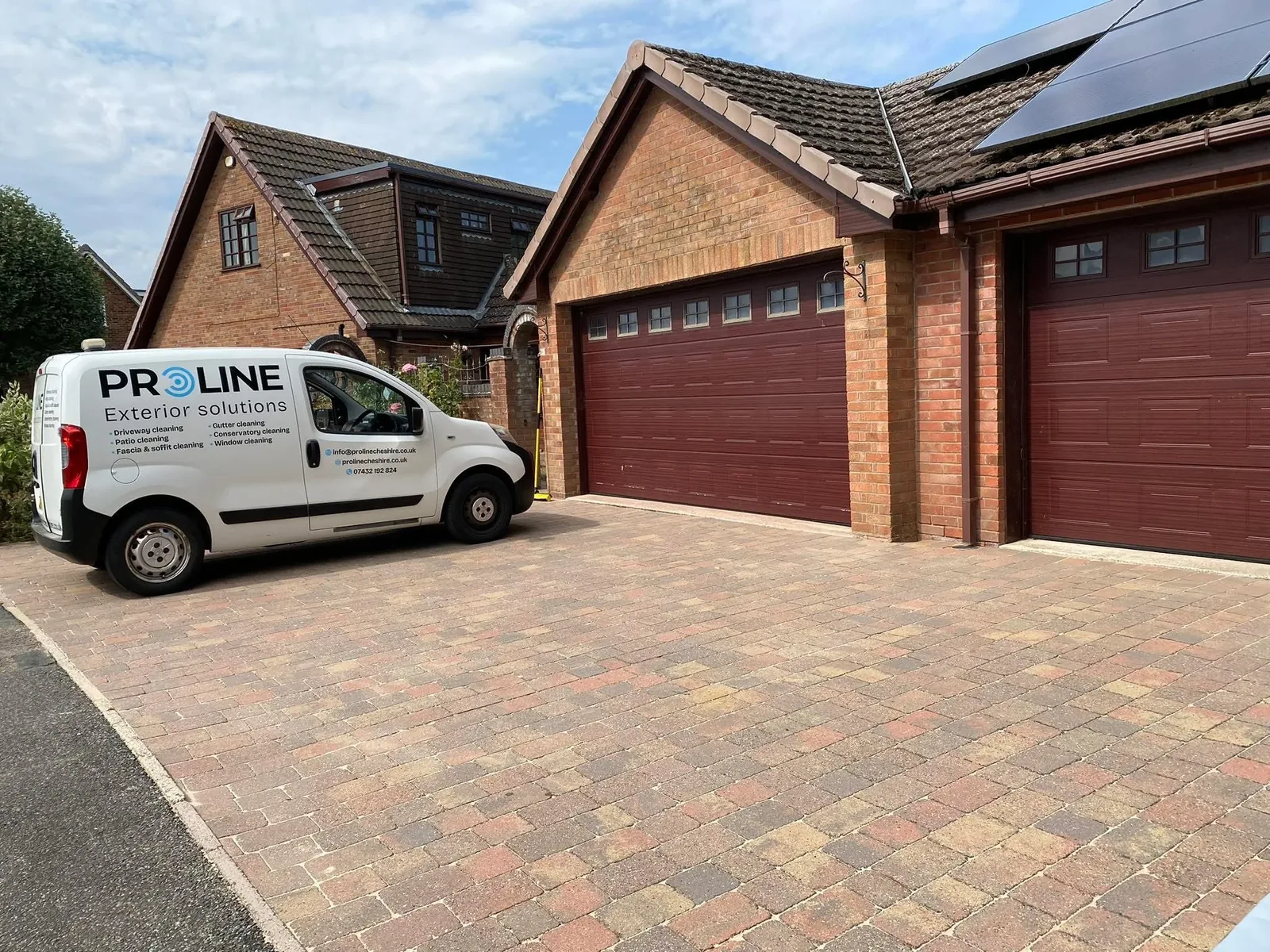
Hardness, porosity, jointing and existing coatings all affect what can be used safely. These are the practical differences we account for before cleaning begins.
Joint weeds, moss and compacted grime are removed from the face and joints. Once the blocks are completely dry, fresh kiln-dried sand is worked back into suitable joints to help restore stability.
Weathered tarmac can shed aggregate when treated too aggressively. We use a measured clean to lift organic growth and traffic film while limiting unnecessary wear to the surface.
Plain, brushed and decorative concrete can hold tyre residue and ingrained grime within its texture. We clean methodically for an even finish and treat isolated marks separately where appropriate.
The decorative pattern and existing sealer need to be considered before cleaning. We inspect for worn or patchy coatings and avoid a process that could leave the finish uneven.
Resin-bound driveways rely on an open, permeable structure. We use a gentler method that removes surface contamination without treating the material like solid concrete.
Sandstone, York stone, limestone, setts and cobbles differ in hardness and porosity. The cleaning method and any treatment are selected around the specific stone, not a generic pressure setting.
Equipment matters, but judgement matters more. The quality of the finish depends on preparation, even working, realistic stain treatment and completing the correct aftercare.
We establish whether the driveway is block paving, resin, tarmac, concrete or natural stone before choosing any treatment or pressure.
Organic growth, oil, rust, tyre residue and failed coatings behave differently, so the likely cause is considered before treatment.
Pressure, nozzle choice and working distance are adjusted to clean consistently without unnecessarily disturbing joints or delicate finishes.
Suitable block paving is allowed to dry fully before kiln-dried sand is introduced, preventing clumping and poorly filled joints.
Sealing is recommended only when the material, drainage, weather and previous coatings make it a sensible next step.
Before starting, we explain likely improvements, limitations, drying requirements and when the driveway can be used again.
The process is planned around the material, the cause of the staining and the finishing work agreed in your quotation.
We identify the material, inspect joints or coatings, check drainage and note vulnerable edges or surrounding surfaces.
Oil, organic growth, rust or other isolated marks are treated according to their type rather than relying on pressure alone.
The driveway is worked in controlled sections so contamination is removed evenly and runoff can be managed responsibly.
We rinse down, inspect the finish and return for re-sanding or sealing when those stages require a properly dry surface.
These photographs show our own completed work, including different paving colours, joint conditions and driveway layouts rather than manufacturer or stock imagery.
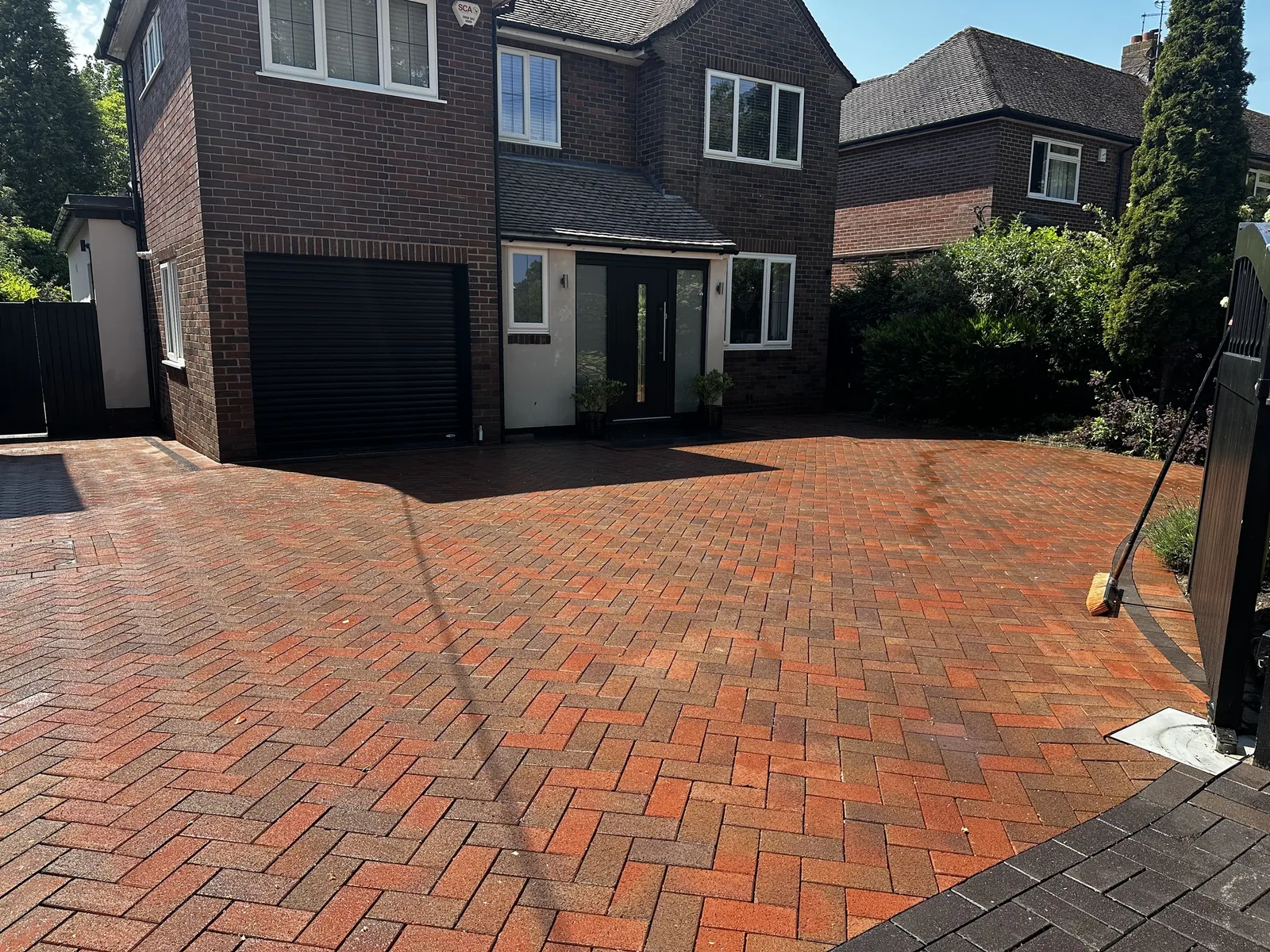
On this project, the visible grime was only part of the problem. Organic growth and depleted jointing had left the paving looking uneven and poorly defined. After the main clean, the blocks were allowed to dry before fresh kiln-dried sand was worked into the joints, producing a neater finish and completing the work correctly.
Organic growth and general grime usually respond very well to professional cleaning. Oil, rust, deeply absorbed staining and damaged old coatings can be less predictable, so we assess them first and explain the realistic level of improvement before work begins.
Green growth thrives in damp or shaded areas and can make the surface slippery. We remove the build-up and use suitable treatment where required.
Growth takes hold in joints, edges and textured surfaces. Cleaning clears the visible material before the correct finishing work is completed.
Established marks often need a suitable treatment and dwell time; simply increasing pressure can damage the surface without solving the cause.
Vehicle use, airborne grime and roadside residue dull the finish. The cleaning method is adjusted around the driveway material and existing coating.
Fresh contamination is normally easier to improve than oil that has soaked deeply into a porous surface. We use targeted treatment and set honest expectations.
These marks require material-specific treatment. We test the safest approach rather than applying one strong chemical across the whole driveway.
Cleaning block paving removes dirt and organic growth from the joints, but it can also remove loose or depleted jointing sand. Leaving those joints low can allow blocks to move and gives wind-blown debris and new weeds somewhere to settle.
Once the paving is fully dry, we brush kiln-dried sand into suitable joints and compact it naturally across the surface. Re-sanding is finishing work—not an optional cosmetic extra—and it should never be rushed onto damp paving where the sand can clump instead of filling the joints properly.
Ask about cleaning and re-sanding →Loose growth, old sand and debris are removed during the cleaning process.
Dry joints allow kiln-dried sand to flow into the spaces instead of sticking at the surface.
The sand is worked evenly into suitable joints to complete the block-paving clean properly.
A suitable sealer can enhance colour, reduce surface porosity, help stabilise jointing sand and make routine maintenance easier. It will not repair damaged paving or guarantee a weed-free driveway, and it is not appropriate for every material or existing coating.
Send photographs of the driveway, access and problem areas so the quotation reflects the job rather than a generic price band.
Get a Leek Driveway QuoteHomeowners across Leek and nearby communities such as Cheddleton, Endon, Longsdon can send photographs for an initial assessment. We look at the driveway material, access, runoff and problem areas before recommending a process.
Every quotation is based on what the driveway genuinely needs—not a one-method-fits-all approach. Explore our wider exterior cleaning services in Leek.
Genuine customer feedback from the Proline Exterior Cleaning Google Business Profile.
Google reviews are not configured.
Clear answers to the questions Leek homeowners ask most often.
The quotation is based on the measured area, surface material, access, drainage, level of contamination and any finishing work. Re-sanding, stain treatments and sealing are priced separately where required, so photographs and a postcode help us provide an accurate figure.
Poor technique can remove too much jointing sand, mark the blocks or damage weak edges. We control pressure, nozzle choice and working distance, then re-sand suitable paving only after it has dried fully.
Cleaning removes loose and depleted material from the joints. Fresh kiln-dried sand helps refill suitable joints and supports the blocks; applying it while the paving is damp can cause clumping and an incomplete finish.
No responsible contractor can promise that. Fresh oil often responds better than contamination that has penetrated deeply into porous concrete or paving. We use targeted treatment and explain the realistic improvement before starting.
Resin-bound surfaces are treated more gently than concrete or block paving. We inspect the condition and permeability first, avoid aggressive pressure and use a controlled method intended to remove surface contamination without disturbing the resin matrix.
No. Sealing can be useful on suitable block paving or pattern-imprinted concrete, but the existing coating, surface condition, drainage and weather must all be considered. We do not recommend it as a blanket add-on.
Outdoor paving cannot be guaranteed permanently weed-free. Cleaning removes current growth, and correct re-sanding reduces open joint space, but new seeds can still arrive through wind, soil and surrounding planting.
Loose growth is removed during cleaning. Established lichen or black organic marks may need a suitable treatment and dwell time. Increasing pressure alone is often less effective and can cause unnecessary surface wear.
Many residential driveways can be cleaned in a day, but size, access and treatments affect the schedule. Re-sanding and sealing often require a return visit because the surface must be dry and the weather suitable.
This depends on the material and any finishing work. A cleaned driveway may be usable once safely rinsed and dried, while freshly sealed surfaces need a longer curing period. We confirm the required time before leaving.
Usually, yes. Please mention any access restrictions, shared drives, parking limitations or unavailable outside taps when requesting a quote so the job can be planned correctly.
We work throughout Leek, including Cheddleton, Endon, Longsdon, Rushton Spencer, Meerbrook, Brown Edge, as well as nearby communities where access is practical.
Choose your area to learn more about our professional driveway cleaning service and request a free local quotation.
Whether you already know what you need or would like some advice first, send us a few photos on WhatsApp or call for a free, no-obligation quotation.
