
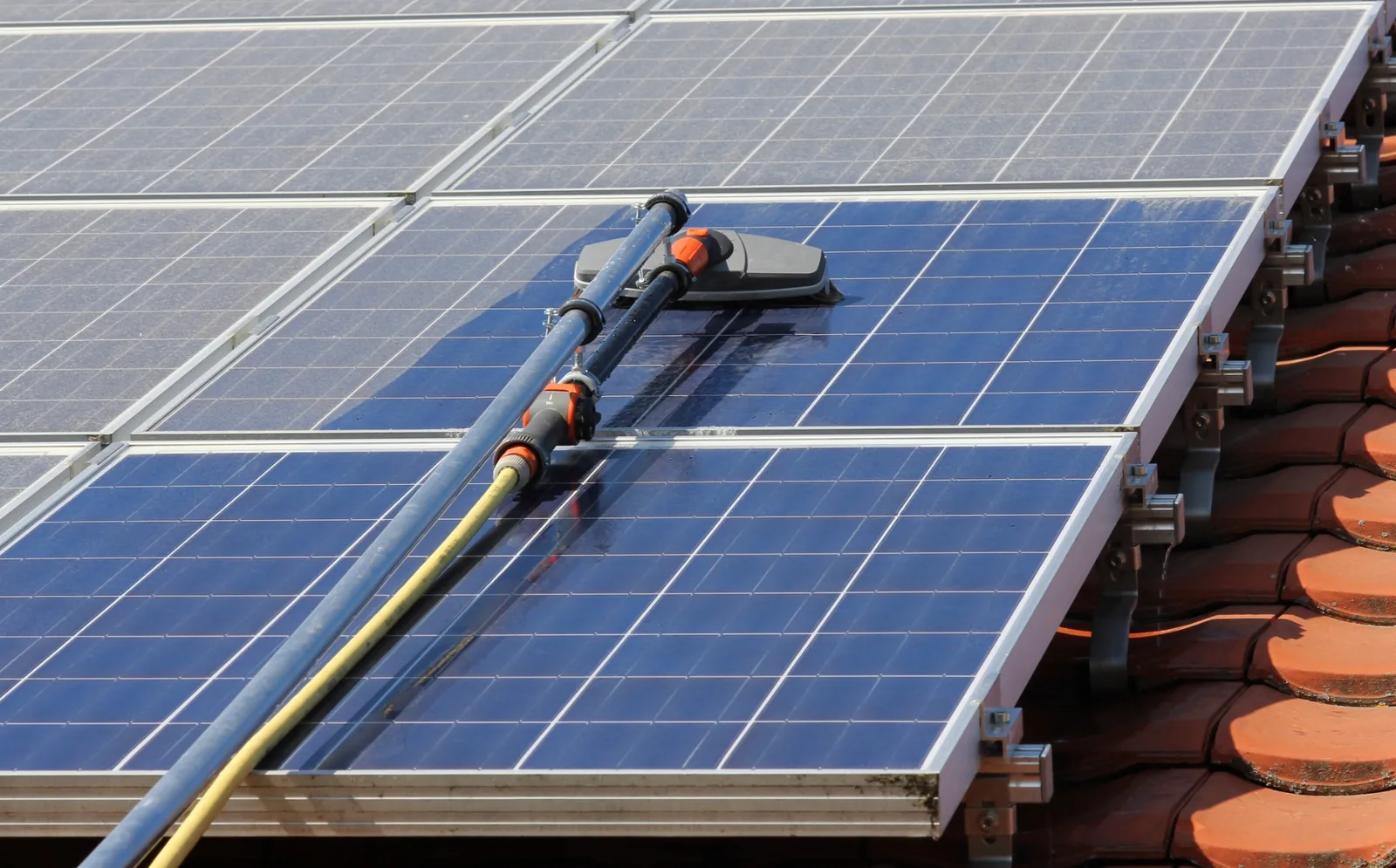
Solar panels are designed for outdoor exposure, and normal rainfall removes some loose dust. Rain does not, however, reliably shift bird droppings, lichen, pollen bonded to the glass or grime gathered along the lower frame. Whether cleaning is worthwhile depends on the level and type of contamination, panel angle, nearby trees and local conditions.
Do solar panels clean themselves?
Panels are often described as self-cleaning because their smooth surface and pitch allow rain to wash away loose material. That description has limits. Low-pitched arrays, panels beneath birds’ favourite perches and systems near trees or busy roads can accumulate stubborn deposits.
The lower edge is particularly prone to a band of dirt where water slows behind the frame. Heavy bird fouling can shade individual cells and deserves attention sooner than a light, even film of dust.
Will cleaning improve electricity generation?
Clean glass allows the system to receive as much light as its design and weather conditions permit. The exact performance improvement varies and should not be guaranteed without monitoring data. A visibly contaminated array is more likely to benefit than one carrying only a light film.
It is sensible to compare inverter or monitoring-app data before and after cleaning, while remembering that cloud cover, season and temperature also change output.
Why purified water is commonly used
Professional water-fed systems often use purified water because dissolved minerals have been removed. This reduces spotting as the glass dries and avoids leaving detergent residues. Soft brushes designed for solar glass loosen contamination while the water carries it away.
The process should avoid pressure on electrical components, cables and seals. Panels are weather-resistant, but they should not be treated like paving.
What to avoid
- Standing or walking on panels.
- Using a pressure washer at close range.
- Applying abrasive pads, household scourers or harsh powders.
- Using strong detergents that may leave a light-blocking residue.
- Working from an unsecured ladder with a long, water-filled pole.
- Cleaning very hot panels with cold water, which may create thermal stress.
A professional solar-panel cleaning process
- Access assessment: checking roof height, ground conditions, conservatories and cable routes.
- Visual inspection: looking for obvious cracked glass, loose components or heavy bird fouling without carrying out electrical testing.
- Purified-water clean: agitating the glass gently with an appropriate brush.
- Edge and corner attention: removing build-up without forcing water into connectors.
- Final rinse: allowing the panels to dry without mineral spotting.
Our solar panel cleaning service page shows the method and project photography used by Proline.
How often should panels be cleaned?
There is no universal annual rule. Some arrays remain acceptably clean for long periods, while others beneath trees or bird activity need earlier attention. A visual check and monitoring data are better guides than a fixed sales schedule.
Spring can be useful after winter grime and before stronger summer generation, but safe access and actual contamination matter more than the month.
Solar panel cleaning FAQs
Can panels be cleaned from the ground?
Many domestic arrays can be reached with professional water-fed poles from a safe ground position. Site layout and height determine what is possible.
Does cleaning affect the warranty?
Cleaning should follow the panel manufacturer’s guidance. Non-abrasive methods and appropriate equipment reduce risk, but owners should check any specific warranty conditions.
Can you repair or electrically test the system?
Cleaning is separate from electrical inspection. Faults, damaged cables or inverter issues should be handled by a qualified solar engineer or electrician.
Will purified water remove lichen immediately?
Established lichen may be difficult to remove safely in one visit. Aggressive scraping is not appropriate on solar glass, so expectations should be discussed.
Think safety before appearance
The biggest risk in DIY solar cleaning is usually access rather than the dirt itself. Long poles, wet ground and roof edges are a poor combination without suitable equipment and planning. For broader roofline maintenance, read our gutter cleaning guide.
To ask whether your array is suitable for cleaning, send clear photographs and your postcode through our quote page.