
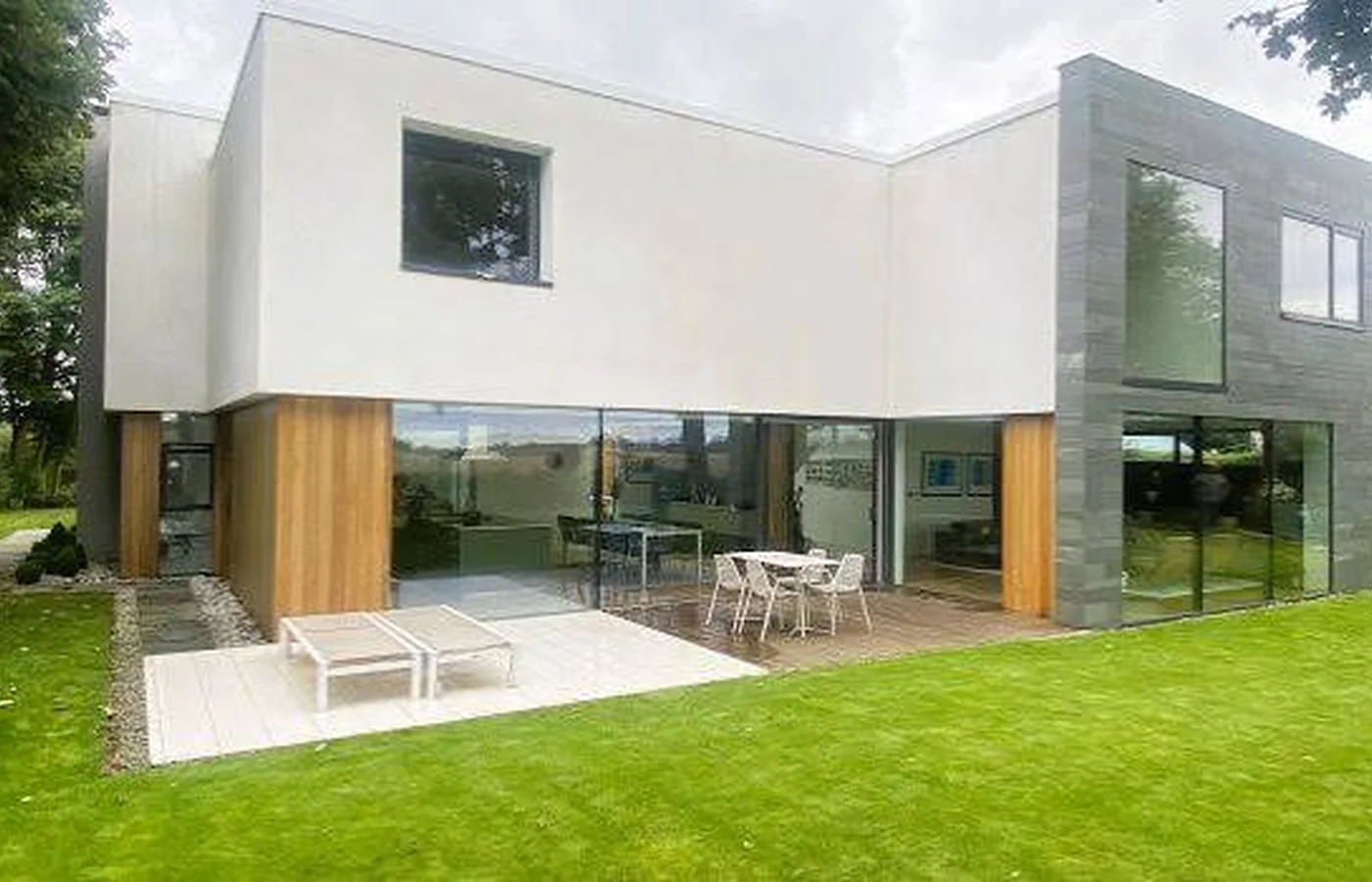
Modern render gives a property a clean, crisp finish, but it also shows organic staining clearly. Green algae, red or pink growth, black marks beneath sills and traffic film can make an otherwise sound façade look neglected. Cleaning render safely is less about brute force and more about selecting the right chemistry, application method and rinse pressure.
Why does render become green, red or black?
Most green staining is algae encouraged by moisture and shade. Red or pink staining is often associated with airborne microorganisms that thrive on damp elevations. Black marks may be a mixture of atmospheric dirt, fungal growth and water tracking from details such as sills, gutters or coping stones.
North-facing walls, elevations near trees and areas with poor airflow usually show growth first. A blocked or leaking gutter can also keep the wall wet, so the source of moisture should be checked rather than treating the colour alone.
Why high-pressure washing can be risky
Rendered finishes are not designed to be attacked at close range with maximum pressure. Aggressive washing can roughen the surface, create visible lines, force water behind defects or remove paint. Even when no immediate damage is obvious, a roughened finish can hold dirt more readily afterwards.
Softwashing uses carefully selected treatment and low-pressure application to break down organic contamination. The exact process depends on the render system, condition and surroundings.
Types of render and what they need
Silicone and thin-coat render
These modern systems are flexible and often marketed as low-maintenance, but they still collect algae. Low-pressure treatment is usually preferred, with close attention to manufacturer guidance and existing defects.
Monocouche and K-Rend-style finishes
These textured mineral renders can hold contamination in their surface. Controlled softwashing can clean the texture more evenly than close-range pressure.
Painted sand-and-cement render
The condition of the paint is crucial. Flaking, chalking or poorly bonded coatings may need repair or repainting after cleaning. A test patch helps set expectations.
Historic or lime render
Older breathable materials require specialist judgment. Harsh products or high pressure may damage the finish and alter how the wall manages moisture.
A careful render-cleaning process
- Inspection: identify the render type, cracks, blown areas, failing paint, vents, cables and vulnerable finishes.
- Protection: assess windows, metals, planting, neighbouring property and runoff routes.
- Test area: confirm response and suitable dilution.
- Low-pressure application: apply treatment evenly with controlled dwell time.
- Rinse or natural weathering: depending on the system and contamination, the surface may be gently rinsed or allowed to continue brightening over time.
- Final inspection: identify any stains caused by defects rather than organic growth.
See our local render cleaning service for more information about the quotation process.
How quickly will the render look clean?
Some staining changes almost immediately. Other marks continue fading over days or weeks as the treatment works and weather rinses the surface. This gradual improvement can be safer than trying to force an instant result with excessive pressure.
How long do results last?
Longevity depends on orientation, trees, drainage details and local conditions. No ethical contractor can promise that organic growth will never return. Correctly treated render should remain cleaner for substantially longer than a superficial rinse, but shaded damp elevations will always need more maintenance than sunny, exposed walls.
Render cleaning FAQs
Will softwashing damage plants?
Professional preparation includes managing plants and runoff, pre-wetting where appropriate and thorough rinsing. The site layout must be assessed before treatment.
Can cracks be cleaned?
Cleaning does not repair cracks. Defects should be noted first, and significant water-entry risks may need repair before work.
Do I need to repaint after cleaning?
Sound coloured render often does not. Painted render may reveal coating defects that were hidden by dirt, so repainting depends on its existing condition.
Can render be pressure washed from a ladder?
Besides the surface risk, this can be unsafe. Professional access and application equipment allow work to be completed from more controlled positions.
Look at the whole elevation
Render staining often connects with other maintenance issues. Overflowing gutters, dirty soffits and leaking joints can all keep the façade wet. Our gutter cleaning guide and soffit and fascia guide explain what to check.
For an honest assessment of your render, send photographs and your postcode through our quote form.